The Bruce R. Thompson Center for Business & Economics hosted two marketing presentations as part of the Lunchtime Lecture Series on October 26 and 27, 2020.
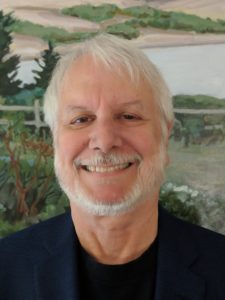
Scott Morgan
Marketing Monday, October 26: How do Advertising Agencies Present Themselves to Clients? Scott Morgan, President/Partner of Brunner, Inc., Pittsburgh gave students an insider’s view into ad agency operation.
Scott is president and partner of Brunner, a top 100 U.S. independent advertising agency with offices in Pittsburgh and Atlanta. He is also chairman of Magnet, the global network of independent ad agencies. The agency is known for its creativity, including its Super Bowl work that was Adweek’s “Brand Story of the Year” and for its expertise in digital media and performance marketing, often cited by Forrester as a marketing innovator. Watch his presentation here on YouTube
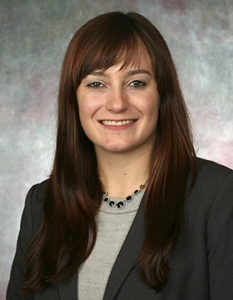
Carla Nagel
On Tuesday, October 27, Carla Nagel, the Executive Director of the Neuromarketing Science & Business Association and the founder of the Neuromarketing World Forum presented, “The World of Neuromarketing: How Neuromarketing, Around the Globe, is Used to Improve Organization Goals.”
Carla Nagel is the Executive Director of the Neuromarketing Science & Business Association and the founder of the Neuromarketing World Forum. She is an open-minded community manager and masters ‘getting things done’ in a nice and friendly way. Although she does not have a background in neuromarketing, she developed an objective helicopter view on the industry worldwide. Carla founded the NMSBA in 2012 and since then she runs it with enthusiasm. Together with her team she is responsible for the publications “Insights”, the Neuromarketing Yearbook, the Shopper Brain Conference Series and the Neuromarketing World Forum.
The Bruce R. Thompson Center for Business & Economics attracts Allegheny’s next generation of business innovators and entrepreneurs by providing a host of co-curricular activities that connect with and deepen their classroom experiences. The Lunchtime Learning Lecture Series provides students with opportunities to gain valuable information on topics and industries related to internships and careers.
On October 22, the Bruce R. Thompson Center for Business & Economics welcomed Isaac Gittens ’14, Senior Program Coordinator at the National Football League (NFL) who presented “Building a Career in Sport.” Isaac shared his journey from Allegheny College to the NFL, using Twitter and showing up when unexpected. How can a student discover a career in the NFL? Isaac can help.
According to Isaac, there are 4 must-have skill sets for a successful career in the NFL:
Excellent presentation skills – be prepared to present at a high level.
Organizational skills.
Interpersonal communication skills- the ability to work with all kinds of people.
Time management skills – everything moves very fast in the sports universe.
Isaac Gittens joined the National Football League in 2016 in Player Engagement. After serving two years in PE he transitioned to the Y&HS Football department in Football Operations. A New Jersey native, Isaac earned a bachelor’s degree in managerial economics from Allegheny College and master’s in sport management from Baylor University. During his time at Baylor, he served as a graduate assistant at the American Football Coaches Association (AFCA).
The Bruce R. Thompson Center for Business & Economics attracts Allegheny’s next generation of business innovators and entrepreneurs by providing a host of co-curricular activities that connect with and deepen their classroom experiences. The Lunchtime Learning Lecture Series provides students with opportunities to gain valuable information on topics and industries related to internships and careers.
Denise Jones ’13 returned on Wednesday, October 14 to discuss her unique journey from Allegheny to the University of Michigan, where she is currently pursuing her Ph.D. in Public Health, Education, and Psychology.
In her conversation, she addressed
Her experiences as one of the only black female Economics students in the Department, and how she cultivated mentorship relationships that assisted her in pursuing work that mattered,
How to utilize one’s Economics Degree as a means to an end, and not the end itself,
The value of an Economics Degree in non-traditional careers,
Why students should “resist” prescriptive career routes and think more openly and creatively about connecting one’s academic training with their passions and purposes,
Denise Jones is an educator, scholar, student advocate, and non-profit leader with over six years of practical and professional experience. Upon graduating from Allegheny College with a degree in Economics and Black Studies, Denise set out to transform the lives of students as a classroom educator in San Antonio, Texas. There, she facilitated the learning of over 180 6th – 8th graders in the subject areas of English, Mathematics, Social Studies, and AVID.
During her time, Denise taught dedicated scholars who, despite their difficult circumstances, invested in learning and growing academically and personally. While she received great joy from her students’ growth and development, Denise recognized that she and her students’ commitment to learning were not enough to break the cycles of poverty and oppression that impeded their successes. Her frustration with the school system’s approaches to addressing inequities and disparities led Denise to pursue a master’s degree in Education Policy from Columbia University’s Teachers College (TC).
As a TC student, Denise amalgamated her practical classroom experiences with theoretical training and utilized her students’ unique stories and experiences to cogitate sustainable solutions to our educational system’s most critical problems. Denise also taught adult student learners and supported their journeys toward obtaining their general education diplomas. Beyond this, Denise worked with distinguished faculty from Columbia and NYU on research projects involving school choice, teacher evaluation, and student health.
These diverse experiences informed Denise’s graduate studies and further catalyzed her interest in
exploring out-of-school and summer-time learning, peer mentoring, and educational inequity.
Denise returned to Youth Enrichment Services (YES), where she currently serves as the Assistant
Executive Director, once she completed her master’s degree. What started out as a three-month summer
appointment turned into four years of youth engagement, student advocacy, program implementation,
strategic planning, non-profit leadership, and community-based research.
Denise’s time at YES has been extremely fulfilling as she has collaborated with partners and stakeholders to move the grassroots non-profit forward, remained actively involved in research and scholarship that has led to national and international conferences and publications – with the most recent in the After school Matters Journal – developed meaningful youth enrichment opportunities that impacted the health of local communities, increased the programming scope and budget, co-facilitated sessions empowering African scholars and female entrepreneurs in Zimbabwe, committed to the professional growth and development of her colleagues, and supported the collegiate journeys of over 30 youth.
Looking Towards the Future
While her work at YES has been extremely rewarding, Denise is ready to connect her grassroots efforts to
the academy to support youth far beyond YES. With the help of scholars at Michigan, Denise hopes to
continue testing YES’ mentorship model and building the case for how community-based practitioners can
help underserved students in out-of-school learning spaces. Denise is eager to explore how to embolden
students from inner-city, low-income communities to shift their mindsets about themselves and to look
inward in a way that connects them to their life purposes and elicits their sense of civic responsibility to their communities.
Denise is especially interested in investigating the factors that youth identify as important to navigating the craziness of their communities and to persisting through their often disturbance-ridden secondary institutions. Denise is also interested in examining the relationship between mentorship and motivation and how this effects youths’ college access and persistence. Ultimately, Denise’s work is youth-
centric and multidisciplinary in nature as it combines a host of disciplines and academic thoughts.
Denise foresees her future as a researcher pursuing solutions and strategies to ameliorate the challenges
that persist in urban communities and schools. Upon obtaining her PhD, she fully anticipates leading – and using – research to better serve youth. Her role will be that of changing lives, building wealth, and
empowering the community, as she believes the community is the unit of change – it builds the knowledge
and then informs the academy.
Denise is excited to join a unique cohort of scholars whose alliance is critical in advancing education policy issues.
This presentation is sponsored by the Womxn in Economics Club at Allegheny College. Please email womxninecon@allegheny.edu for more information.
On October 5, the Bruce R. Thompson Center for Business and Economics welcomed John Paul Marcantonio ’01, Chief Executive Officer and Managing Director of Gale Pacific Ltd. John Paul will share his Allegheny journey and how his company has adapted during the ongoing pandemic.
GALE Pacific Limited (GALE) is a trusted leading global marketer and manufacturer of branded screening and shading products for domestic, commercial and industrial applications. The company has recently introduced GALE Guard reusable face masks to meet the public’s needs for face masks with antimicrobial treated fabric.
John Paul joined GALE Pacific in October 2017 as the General Manager of the Americas business. He was appointed Chief Executive Officer in November 2019 and was appointed as Managing Director in August 2020. John Paul has extensive experience working across both consumer and commercial products sectors globally. Prior to joining GALE Pacific, John Paul built an impressive career at Newell Brands in roles of increasing responsibility in marketing, sales and management over fifteen years.
John Paul lived and worked in Melbourne, Australia for several years as the Regional Marketing Director of Newell Brands’ APAC hardware businesses and has held multiple global product and brand marketing leadership positions over his tenure. In his last role before joining GALE, John Paul served as the Global Vice President of Marketing for the Rubbermaid brand.
The Bruce R. Thompson Center for Business & Economics attracts Allegheny’s next generation of business innovators and entrepreneurs by providing a host of co-curricular activities that connect with and deepen their classroom experiences. The Lunchtime Learning Lecture Series provides students with opportunities to gain valuable information on topics and industries related to internships and careers.
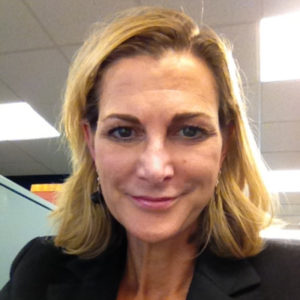
On Wednesday, October 7, Allegheny College will welcome Anne Gearan ’85, White House correspondent for The Washington Post to answer questions from both the Center for Political Participation and Center for Business & Economics Fellows concerning this year’s presidential election campaign. The Allegheny community is invited to listen in as Anne fields student questions and illuminates presidential campaign media coverage.

Allegheny Community members can supply their questions in advance of this event due to the tight time constraints, and the Fellows will ask the questions on your behalf.
To register for what promises to be a lively discussion, please email bryan@allegheny.edu.
Anne Gearan is a White House correspondent for The Washington Post, with a focus on foreign policy and national security. She covered the Hillary Clinton campaign and the State Department for The Post before joining the White House beat. She joined the paper in 2012 from the Associated Press, where she served as chief diplomatic correspondent, Pentagon correspondent, White House reporter and national security editor. She also covered the Supreme Court. Anne is a 1985 Allegheny College graduate with a BA in English and History.
The Bruce R. Thompson Center for Business & Economics is partnering with the Allegheny Law & Policy Program to sponsor this special event.
In the second lecture in this year’s theme, Seeking Justice in a Divided Nation, the Bruce R. Thompson Center for Business & Economics welcomed Dr. George Bulman, Assistant Professor of Economics, University of California, who presented his research entitled “Law Enforcement Leaders and The Racial Composition of Arrests.”
Dr. Bulman introduces a novel avenue of study for understanding the mechanisms behind racial discrimination in law enforcement. He will explain a new 25‐year panel history of the race of every U.S. sheriff to shed light on the potentially important role of managers who make hiring decisions and set departmental priorities. Comparing agencies that experience racial transitions to agencies with overlapping jurisdictions reveals that the ratio of Black‐to‐White arrests is significantly higher under White sheriffs. Heterogeneity analysis indicates that the effects are driven by arrests for less‐serious offenses and by targeting Black crime types.
George Bulman is an Associate Professor of Economics at the University of California at Santa Cruz. Prof. Bulman is a public economist who specializes in evaluating the effects of local and federal policies using large administrative data sets. His research examines topics such as the factors that shape the college enrollment decisions of low-income students and the role of race in law enforcement. His papers have been published in leading economics journals, including the Journal of Public Economics, the Journal of Labor Economics, and the American Economic Journal. Prior to joining the faculty at U.C. Santa Cruz, he earned a B.S. at Haverford College and Ph.D. at Stanford University.
The Bruce R. Thompson Center for Business & Economics attracts Allegheny’s next generation of business innovators and entrepreneurs by providing a host of co-curricular activities that connect with and deepen their classroom experiences. The Lunchtime Learning Lecture Series provides students with opportunities to gain valuable information on topics and industries related to internships and careers.
October 6, the Bruce R. Thompson Center for Business & Economics will host Julianne Dunn, Cleveland Federal Reserve Bank. “Good policy can’t be created in a vacuum, “says Julianne Dunn. She emphasizes including the real drivers of the economy—businesses and workers—to ground and inform economic policy.
As an economic analyst at the Federal Reserve Bank of Cleveland, she combines insight from business and community leaders with economic data to assess regional conditions and to craft the policy message for briefing President Loretta Mester ahead of each FOMC meeting. She also contributes to Bank publications including the Beige Book, District Data Briefs, and Metro Mix.
While pursuing master’s degrees in International Relations and Economics at Syracuse University, Julianne researched how multinational companies contribute to economic growth in developing countries. During an internship with the U.S. Foreign Commercial Service in Bangkok, Thailand, she advocated for more resources to strengthen the United States-Cambodia trade and investment relationship. Before joining the Fed, Julianne worked on economic forecasts as an economist at MarketResearch.com. A lifelong Big Ten football fan, she received a bachelor’s degree in International Studies from The Ohio State University.
The Bruce R. Thompson Center for Business & Economics attracts Allegheny’s next generation of business innovators and entrepreneurs by providing a host of co-curricular activities that connect with and deepen their classroom experiences. The Lunchtime Learning Lecture Series provides students with opportunities to gain valuable information on topics and industries related to internships and careers.
On September 8, the Bruce R. Thompson Center for Business and Economics welcomed Fields Jackson, Jr. ‘80, who presented “Making the Business Case for Diversity.”
The first talk in this year’s Seeking Justice in a Divided Nation Lunchtime Lecture series, Jackson shared his Allegheny journey to NASCAR and ultimately to his current position as the Founder, CEO and Chief Cheerleader of Racing Toward Diversity Magazine, President, College Diversity Network and Executive Director of the Historically Black Colleges & Universities Business Dean Roundtable. In this presentation he explains how diversity improves company performance both in profitability and innovation, particularly when problems are complex.
He asked students, How do you know if a company values diversity?
Here’s Fields Jackson’s 7 Tips to prepare for your next job or internship interview:
Check out the Board of Directors (generally found on the investor website), do you see diversity?
Take a look at the senior or executive staff, same question.
Who are the company’s partners, their networks or affiliations?
Do they have a public vendor program? Do they attend special events?
Do they attend Diversity job fairs?
Are they active in social media, do they walk the talk?
Google the company, what are people saying?
Network with Fields by connecting with him on LinkedIn.
Fields Jackson
Mr. Jackson is currently the Founder, CEO and Chief Cheerleader of Racing Toward Diversity Magazine, Cary, NC, President, College Diversity Network and Executive Director of the HBCU Business Dean Roundtable. Fields was recognized by Diversity Best Practices as one of the Top Diversity Thought Leaders on Twitter.
Fields has also been identified by Onalytica, London, England, who helps run influencer programs for some of the largest brands in the world as #13 of the top 100 global influencers focusing on Gender Equality and Diversity. Hive Learning recently recognized Fields as one of the Most Influential Diversity & Inclusion Leaders – 2019. According to Hive – Fields Jackson is an influential Diversity and Inclusion advocate and expert who publishes Racing Toward Diversity magazine. He advocates that job seekers conduct their due diligence in finding Diverse workplace opportunities through research, networking and asking the right questions.
Fields received his Bachelor of Arts Degree in Economics and Bachelor of Arts Degree in Philosophy from Allegheny College, Meadville, PA. Fields received his MBA Degree from Northern Illinois University, DeKalb, Ill.
The Bruce R. Thompson Center for Business & Economics attracts Allegheny’s next generation of business innovators and entrepreneurs by providing a host of co-curricular activities that connect with and deepen their classroom experiences. The Lunchtime Learning Lecture Series provides students with opportunities to gain valuable information on topics and industries related to internships and careers.
Dr. Michael Barbara, Chief Behavioral officer at Clicksuasion Labs, will Zoom in on September 23 to update students on how consumer behavior has shifted in the “new normal.”
With literally thousands of decisions that we make each time you step into a grocery store or a Best Buy or your favorite clothing store – how do you decide what to buy? More important, how do these stores decide how to persuade you to pick one item over another? Push this button instead of that one? Attend this Zoom lecture to get insight on what’s going on behind the scenes before you make your next shopping trip. Meet Michael Barbera on YouTube
Dr. Michael Barbera is an award-winning consumer psychologist and business strategist for Fortune 50 companies. He is a leading expert in the complex factors that drive the entire consumer decision-making process, including consumer behavior, emotion, and experience. His practice areas include social psychology, decision-making, brand management, marketing, product placement, and long-term business growth strategies.
As the chief behavioral officer at Clicksuasion Labs, Michael helps clients to better understand consumer influence and consumer behavior, both online and in person. With Michael’s help, companies build customer experiences that are more efficient, engaging, and effective. He also creates evidence-based solutions that affect both external marketing strategy and internal operations management with behavioral economics and behavioral finance.
Michael has worked with large organizations including Boeing, Microsoft, The Washington Post, John Deere, Harley Davidson, LendLease, the United States Department of Defense, and the United States Department of State. He has also worked with academic institutions including Ithaca College, Purdue University, Duke University, and the University of North Carolina. Michaels’s clients have also appeared on the Billboard Top 40, ABC’s Shark Tank, Bravo’s Million Dollar Listing, and Gordon Ramsay’s Kitchen Nightmares.
Michael champions entrepreneurs and business leaders as a teacher, moderator, and mentor. In 2015, the White House recognized Michael for his many contributions to entrepreneurship. Michael shares research, insights, and thought leadership as a celebrated keynote speaker, host of the Clicksuasion podcast, and dynamic TEDx presenter. More than 100,000 people have seen Michael speak on four continents, and he has earned more than 250,000 views online.
The Bruce R. Thompson Center for Business & Economics attracts Allegheny’s next generation of business innovators and entrepreneurs by providing a host of co-curricular activities that connect with and deepen their classroom experiences. The Lunchtime Learning Lecture Series provides students with opportunities to gain valuable information on topics and industries related to internships and careers.
It’s quite the fusion of talents joining the ranks of Allegheny College’s faculty in the fall of 2020. From scholars in modern Arabic literature and French and Francophone studies to a former economic analyst for a global banking firm, Allegheny’s new faculty members bring unique backgrounds and qualities to the campus classrooms this academic year. Let’s meet each of them briefly:
Sami Alkyam
Assistant Professor of Arabic
With Sami Alkyam, Allegheny is not only welcoming an assistant professor in the Department of World Cultures and Languages, but also a new director of Muslim student life.
Sami Alkyam
Alkyam holds a Ph.D. in Arabic language and literature as well as a doctoral minor in second language acquisition from the University of Wisconsin-Madison. He will teach Arabic language and culture classes and core classes in international studies at Allegheny. He previously worked at Harvard University from 2012 to 2018.
His research interests include modern Arabic literature and cultural studies; gender and sexuality studies; trauma and the war novel; Arabic dictator novels; film and television studies; Postcolonial and literary theory; Arabic literary translation, and African literature in translation.
“In my current research I explore the manifestations of dictators and dictatorships in contemporary literary genres — the representation of its various configurations and the politics of (re)writing history. Currently, I am working on a manuscript in which I study the aesthetics of death in contemporary Iraqi literature. More than any time in the history of modern Iraq, poetry and fiction have been bound to social and political events in Iraq. Iraqi literature today reflects the trauma of a nation torn between omnipresent war and reminiscence of three decades of dictatorship,” he says.
“As such, I describe Iraqi writers today as ‘bereaved storytellers’ who give voice to the wounds of their nation and people. I will finish the manuscript in the next two years,” Alkyam adds.
His work has appeared in the Journal of Postcolonial Studies, Journal of Literature and Trauma Studies, Journal of Arts and Humanities and Journal of Studies in Literature and Language. He also works on literary translation.
“I am a true believer of diversity; in fact, I am especially drawn to Allegheny given its vibrant and diverse community and the emphasis on internationalism and interculturalism as well as my department’s commitment to teaching languages. In the classroom, I view teaching, not as a career or task, rather as a passion. It is this passion that pushes me to teach Arabic language and literature in the clearest and most effective manner,” he says.
“I believe in making my class a changing experience for my students. Therefore, I see myself as a facilitator of student communication, rather than the center of the classroom. My main goal is to empower my students to engage while providing a classroom environment conducive to productive communication,” says Alkyam.
Away from academia, he is the father of two “beautiful kids: a girl, Uswah, and a boy, Karam, who are the center of my world. I like to play soccer; I like swimming and reading, too.”
Megan Bertholomey
Assistant Professor of Psychology
Megan Bertholomey knows a lot about small liberal arts colleges such as Allegheny. She is a graduate of Knox College, where she was a studio art major and psychology minor. “My medium was clay. Other than the commercial pottery painting classes, there usually aren’t many public resources/studio spaces for ceramicists, so I look forward to making friends in the Art Department and hope to one day collaborate or audit a class with them,” she says.
Megan Bertholomey
Bertholomey also served as both a teaching assistant and an instructor in introductory psychology classes during her Ph.D. training at Indiana University-Purdue University, Indianapolis. She taught a course called “Drugs and Behavior” at the University of Pittsburgh for three fall semesters during her postdoctoral training. Last year, she was a visiting assistant professor at Chatham University, covering graduate-level introductory neuroscience courses with labs, as well as an undergraduate-level introductory biology class.
Her research interests include understanding the factors contributing to and mechanisms underlying the risk of drug abuse and other conditions like anxiety, depression and post-traumatic stress disorder that tend to co-occur with substance use disorder. “One major and well-known contributing factor is stress, but there is still much we don’t know about how stress affects the brain to lead to or exacerbate these disorders,” she says.”Because of my research experience, I’m very interested in teaching neuroscience and psychology topics related to drug use and abuse, psychopharmacology, neuroendocrinology, sexuality/sexual behavior, learning and memory, research methods and statistics.”
She says that “while most of my artistic talents have gone into making research posters and PowerPoints, I do like to paint and draw when I can. I was also a member of the dance collective when I was in college — mine was called Terpsichore — so a similar Greek naming convention to Orchesis — and love to dance, although I don’t have much formal training.”
She also considers herself “to be a bit of a foodie and a craft beer aficionado, so I love to cook and plan to eventually try my hand at home brewing using one of the many kits that have been gifted to me over the years. I am also a reservoir of random knowledge that comes in very handy for trivia — especially music trivia, as well as pop culture references from the ’90s and ’00s.”
Delia Byrnes
Visiting Assistant Professor of Environmental Science & Sustainability
Delia Byrnes joins the Allegheny community by way of Canada, where she was raised, and the University of Texas at Austin, where she studied and eventually taught in the English Department.
Delia Byrnes
“I’m joining the Environmental Science and Sustainability program at Allegheny through a somewhat unusual route: I’m not even a scientist! Rather, my Ph.D. in English and my experiences teaching literature inform the humanities approaches I bring to environmental studies,” says Byrnes. “Over the past four years, I’ve taught courses on oil culture, apocalyptic fiction and film, African American literature, and multi-ethnic environmental culture at the University of Texas at Austin. I’m thrilled to join such a rich interdisciplinary community at Allegheny, and I’m especially excited to collaborate with students on projects that center environmental justice.”
Byrnes earned her bachelor’s degree from Simon Fraser University in British Columbia and her master’s and doctorate from the University of Texas.
She focuses her research on contemporary environmental art and storytelling, focusing on how writers, artists and other mediamakers harness their imaginations to produce new knowledge about environmental relations. “I’m especially interested in the ways that fossil fuel shapes our daily lives, and how Black, Indigenous, and People of Color authors illuminate more just and habitable futures,” says Byrnes.
When she’s not in her Carr Hall office, Byrnes says she is a movie and television fan “and will find any opportunity to teach my favorites, from the FX series ‘Atlanta’ to Janelle Monáe’s Afrofuturist epic, ‘Dirty Computer.’ When I’m not reading or watching something, I love wandering around town on foot or on my bike, and as a Canadian, I am beyond excited to experience the four seasons in Meadville!”
The most consistent part of her time in Meadville so far: “My weekly visits to Hank’s Frozen Custard.”
Priyanka Chakraborty
Visiting Assistant Professor of Economics
It has been quite a year for Priyanka Chakraborty. She graduated from Southern Methodist University with her Ph.D., won the Melody Rice Memorial Award for her dissertation “Essays on Issues in Management and Gender” and “was truly excited to travel cross country from Texas to Pennsylvania and join the Allegheny family!”
Priyanka Chakraborty
It has been quite an academic journey for Chakraborty. Reading Keynes in college had a powerful impact on her and shaped the course of her passion for and career in economics. “I grew up in India and attained a college education through scholarships based on academic achievement,” she says. “I majored in economics at Presidency College and won the Gold Medal from Calcutta University. I explored New Delhi, jazz and micro and macroeconomics during my master’s at Jawaharlal Nehru University and read obsessively on game theory and behavioral economics, which I still do.”
She worked closely with counterparts from Great Britain for HSBC Bank as an economic analyst for a couple of years before traveling to Texas to attend the doctoral program at Southern Methodist University. “I taught classes independently, worked extensively as a teaching assistant and as a tutor and student counselor. The experiences during my academic and professional career gave me an immense appreciation of cross-cultural understanding and helped hone my teaching pedagogy which is geared toward creating an inclusive class environment and facilitating learning through discussion,” she says.
As an applied economist, she uses laboratory and field experiments, as well as survey data, to answer questions in behavioral and labor economics, with a focus on gender, education, management, leadership and mentoring. “My mantra is: ‘When it comes to understanding and changing human behavior, we can do better.’ My research broadly focuses on the economics of discrimination and disparities in the labor market with an overarching goal of understanding and mitigating gender and racial gaps. I am interested in finding policy interventions that promote healthy, efficient and more inclusive workplaces,” she says.
She has traveled extensively, exploring new cities and local cultures, food, films and music. “My favorite cities in the world so far are Jaipur, Boulder, Ann Arbor, Mexico City, Antigua, Kuala Lumpur and Alexandria,” says Chakraborty. “I love finding new coffee shops, record stores, bookshops and theatres. I am a cinephile, adore the works of Satyajit Ray, Wes Anderson and Alejandro Jodorowsky, and have enjoyed working with the South Asian Film Festival and Oak Cliff Film Festival in Texas. Being an epicure, I love creating fusion food and bakes with Asian and American influences.”
While she has been classically trained in Hindustani music, “I enjoy listening to Ella Fitzgerald as much as Ravi Shankar, and among my most-prized possessions are autographed Jimi Hendrix and Ravi Shankar vinyl records straight from the ’60s!”
Emma Chebinou
Visiting Assistant Professor of French
Emma Chebinou is welcomed into the World Languages and Cultures Department as a well-traveled scholar and is thrilled to collaborate with new faculty and students. Her education began in France, where she received her bachelor’s degree from the Université Paris XII- Créteil, and then her first master’s degree from the Université Sorbonne Nouvelle in Paris. Chebinou then came to the United States, where she earned her second master’s degree from the University of South Florida and then her Ph.D. from Florida State University.
As a new faculty member of the Diversity Teaching Fellowship, Chebinou is dedicated to sharing her diverse and multi-layered experience through the curriculum. She hopes that by teaching diversity-related topics, students will be in a position to be aware of their identities as well as others’ differences, which leads to not only their achievements but also to the expansion of their horizons. This approach will lead them to acquire cultural competency to interpret the world and its sophisticated facets.
“I see the classroom as a safe space to exchange knowledge,” says Chebinou. “Besides the fact of seeing excitement on the students’ faces when they understand concepts, I look forward to learning from them, which informs my research and personal life. This couldn’t be done without our students’ insightful ideas.”
During this current pandemic, Chebinou’s main goal is to maintain the human dimension in her classes.
“I want to turn the new COVID adjustments in class into a positive asset rather than obstacles to teaching and learning,” says Chebinou. “Technology has always made the classroom more appealing, and the Zoom implementation is beneficial in helping me create and explore a new teaching approach.”
Chebinou’s academic interests are wide-ranging, from societal issues such as urban problems, violence, discrimination and freedom and civil rights, to hip-hop and stand-up comedy, to African (North and Sub-Saharan) and Caribbean literature. She also has research interests in French national ethnic, gender and religious identity; second- and third-generation of immigrants and diaspora in literature; 20th- and 21st-century French and Francophone studies; Postcolonial studies and African-American studies.
Her hobbies are as varied as her academic pursuits. Chebinou enjoys singing old and contemporary rhythm and blues and Gospel songs, and she has sung in gospel choirs. Her talents extend into the culinary world, as she likes to cook African and French food and is especially good at making crepes. “Coming from France, I love designer fashion,” shares Chebinou. “I am such a shoe collector that I would need an entire room to fit them all! I also like discussions about astrology and Feng Shui.”
Dara Coleby Delgado
Assistant Professor of Religious Studies
Dara Coleby Delgado joins Allegheny’s Department of Philosophy and Religious Studies as an asset for fostering global perspectives in the classroom.
Dara Coleby Delgado
“My objective as a teacher is to foster a student-focused learning environment that both challenges and motivates students to develop their own learning interests and critical thinking skills,” says Delgado. “Specifically, through trusting student-teacher relationships and safe learning-centered classrooms, I see myself as partnering with my students as they develop into independent globally minded scholars. Ultimately, the goal is to explore how religion challenges us to think critically about the human experience, with particular attention to the Christian traditions and their impact on history and culture.”
An AAUW 2018-2019 American Dissertation Fellow, Delgado’s research interests include the history and theology of American Christianity (Pentecostalism), as well as the role of race, gender and popular culture in American religion during the modern era. These interests culminated in her dissertation, “Life, Liberty, and the Practicality of Holiness: A Social Historical Examination of the Life and Work of Ida Bell Robinson.”
Before joining the faculty at Allegheny, Delgado completed a bachelor’s degree at Niagara University in history, a master’s at Northeastern Seminary, a Master of Theological Studies at Tyndale University College & Seminary, and a Ph.D. at the University of Dayton in theology. At the University of Dayton, she taught traditional undergraduate students in the Department of Religious Studies and then taught New Testament and Ethics in the Department of Religion and Philosophy at Roberts Wesleyan College in Rochester, New York.
“When I am not teaching and writing, I am enjoying the company of friends and family, volunteering, and attending concerts and shows,” says Delgado.
Guadalupe Lupita Gonzalez
Assistant Professor of Psychology
Guadalupe Lupita Gonzalez brings experience in cognitive neuroscience with her to Allegheny. She received her bachelor’s degree in psychology and business administration from Bethel College and a Ph.D. in psychology from the University of Texas at Austin. She also has instructional experience from leading psychology labs at Bethel.
Guadalupe Lupita Gonzalez
Gonzalez has a passion for social justice and increasing diversity in higher education which has driven her research into the effects of social contexts on racial biases in socio-cognitive processes (for eaxmple, attention, interaction intentions).
“I use electroencephalography (EEG/ERPs) and eye-tracking to answer questions such as ‘How does the social context influence the perception of racial outgroups?’ and ‘How is the perception of racial outgroups associated with racially biased behavior?’” says Gonzalez. “My current research uses eye-tracking to investigate how competitive social contexts influence attention and memory for racial in-group and out-group members, as well as one’s willingness to interact with racial out-groups. I’m also interested in racial health disparities.”
In addition to her research, Gonzalez has been involved in different organizations and programs that aim to increase the number of minoritized individuals in higher education.
“I also love to read, cook (especially Mexican food) and travel to Mexico,” she says. “Spanish was also my first language so I can fluently speak, read and write in Spanish.”
Gonzales is musically gifted as well — she used to play the violin and also played in a mariachi during middle school and high school.
Chris Normile
Assistant Professor of Psychology
Chris Normile is joining the ranks of first-generation faculty members at Allegheny. He completed his bachelor’s degree in psychology at Bloomsburg University, master’s degree in experimental psychology at Towson University, and Ph.D. in applied experimental psychology at Central Michigan University.
Chris Normile
“My research focuses on the intersection of psychology and law,” Normile says. “More specifically I have studied police interrogations, false confessions and jury decision-making. My most recent work investigates people’s perceptions of wrongfully convicted exonerees. Pedagogically speaking, I’m interested in statistical learning in college students.”
Although Normile thoroughly enjoys research and teaching, he has a variety of other interests outside of the classroom.
“I’m a big fan of playing board games of all kinds, from silly party games to more complex Eurogames,” says Normile. “As an undergraduate I played club Ultimate Frisbee, which is a hobby I still enjoy today.”
Jesse Swann-Quinn
Assistant Professor of Environmental Science and Sustainability
Jesse Swann-Quinn grew up in an Allegheny Gator family — his mom and uncle both graduated from the College. Now, after earning a Ph.D. in geography from Syracuse University, Swann-Quinn has joined the Allegheny community as a faculty member in the Department of Environmental Science and Sustainability.
Jesse Swann-Quinn
Before entering graduate school, Swann-Quinn spent five years producing wildlife documentaries for National Geographic Television, and he served as a Public Humanities Fellow with the New York Council for the Humanities. Swann-Quinn says he draws on these transdisciplinary experiences in both his research and teaching.
Swann-Quinn taught at Syracuse as a graduate student and adjunct faculty member. His teaching focuses on the social science of global environmental politics, economics and culture, but it also incorporates elements of the digital and environmental humanities.
Swann-Quinn’s interests as a geographer center on environmental politics of natural resources, how humans struggle over and govern the environments around them, and a variety of other related topics in the environmental social sciences. “My research specifically examines the political and environmental effects of resource extraction, primarily focused on the former Soviet Union and South Caucasus,” Swann-Quinn says. He also has ongoing interests in urban environments, environmental justice, resource nationalism, animal studies, territorial conflict and media studies.
“When I’m not in the classroom or doing research, I like to be outside as much as possible, hiking and running when the weather’s warm and cross-country skiing when it isn’t,” Swann-Quinn says. He says he also enjoys “getting lost in old atlases” and following technology trends.
“My wife and I also just had our first child last winter,” Swann-Quinn says, “which has kept us extra busy these past few months (and made quarantine life that much more interesting).”
PJ Torres
Visiting Assistant Professor of Biology
While new to the Allegheny community, PJ Torres brings experience teaching at another Great Lakes Colleges Association institution, Denison University.
PJ Torres
At Denison, Torres served as a Consortium for Faculty Diversity fellow in 2015 and then as a visiting biology faculty member until spring 2018. His career has also included faculty positions in the biology departments at Queens University of Charlotte and, most recently, Colgate University. Torres holds a bachelor’s degree in environmental science from the University of Puerto Rico (Rio Piedras campus) and a Ph.D. in ecology from the Odum School of Ecology at the University of Georgia.
Torres’ research focuses on understanding the structure and function of freshwater ecosystems with emphasis on tropical headwater streams. His dissertation and current research is based on Puerto Rico, assessing the landscape-scale effects of large dams on headwater stream ecosystem processes.
“I’ve also worked with students in Costa Rica, Georgia and Ohio looking at how animal consumers influence whole-ecosystem processes such as decomposition, primary production and nutrient cycling. The current plan for my lab here at Allegheny is to continue this work both in Puerto Rico and locally using new study sites in Northwest Pennsylvania.”
Torres also plans to incorporate microorganisms and time into current and new projects. “In particular, we will be looking at synergies between aquatic fungi and animal decomposers, how their relationship determines the rate of organic matter breakdown, how the decomposition mechanisms change over time and how these respond to natural disturbance and seasonal variation.”
As an active member of the Society for Freshwater Science, Torres serves as an early career delegate on the board of directors and helps to coordinate the INSTARS program. INSTARS is a mentoring program during the Society for Freshwater Science annual meeting that provides help to undergraduate students from underrepresented groups who are interested in the study of freshwaters.
In his spare time, Torres enjoys fixing (“or breaking,” he says) stuff around the house, and he cooks most of his food over fire or charcoal. Torres also has played drums in three bands and can be found road-trip-chasing locally owned BBQ spots, limited-release beers and new baseball stadiums.
“I’m a big fan of advanced metrics and statistics in baseball,” says Torres, “and do a bit of work as a volunteer data analyst for CS:GO and Valorant eSports teams.”