Academics, Publications & Research

Allegheny Junior Susan Washko Earns Udall Scholarship Honorable Mention

Susan Washko

April 21, 2015 – Susan Washko, a junior at Allegheny College, has received an honorable mention in the annual scholarship competition of the Morris K. Udall and Stewart L. Udall Foundation. Washko, an environmental science major and Spanish minor at Allegheny College, is from Hudson, Ohio.

The Udall Foundation awards scholarships to college sophomores and juniors for leadership, public service and commitment to issues related to American Indian nations or to the environment. The scholarship honors the legacies of Morris Udall and Stewart Udall, whose careers had a significant impact on American Indian self-governance, health care and the stewardship of public lands and natural resources.

Washko is a student leader on issues related to sustainability. The Pennsylvania Environmental Resource Consortium recently named her a “Campus Sustainability Champion” for her work as president of Edible Allegheny, through which she assists with the DeHart Local Foods Dinner, helps to maintain the student garden and edible plantings, leads student trips to local farms and assists local farmers.

A member of the board of Students for Environmental Action at Allegheny College, Washko resides in a special-interest house called “Green Living,” which is focused on sustainability. She also works as manager of the college’s swim team and is a member of the College Choirs.

In addition, Washko is a research assistant during the academic year in a lab run by Professor of Environmental Science Rich Bowden, while in the summer she works with Professor of Biology Scott Wissinger at the Rocky Mountain Biological Laboratory. She is also a teaching assistant for a freshman seminar on the conservation of natural resources.

This semester, however, she is in Costa Rica studying tropical ecology and conservation.

“It’s been an amazing adventure to travel across the country immersed in all the different ecosystems and biological diversity. When I’m not on field trips, I spend time at the biological station in Monteverde, which is a beautiful town on the Continental Divide,” Washko says. “I’m working on my personal research project in Monteverde at present, studying the differences in species composition of butterflies across forest, a coffee plantation, a banana plantation and pasture.”

For the month of April Washko is living with a family in Costa Rica. “It’s giving me an amazing chance to explore Costa Rican traditions, food, and speak lots of Spanish,” she says.

Following graduation from Allegheny, Washko plans to earn a Ph.D. and become an ecological researcher. “I really love working outside exploring how ecosystems function and how humans impact the intricate systems,” she says.

Only 50 Udall Scholars and 50 Honorable Mentions are selected nationally each year.

“Recognition by the Udall Foundation places Susan among the nation’s most promising young leaders in efforts to advance sustainability,” said Terrence Bensel, Allegheny professor of environmental science and director of the Allegheny Gateway. “It is a prestigious achievement for her and for Allegheny College.”

The Udall Foundation is an independent federal agency that was established by Congress in 1992 to provide federally funded scholarships for college students intending to pursue careers related to the environment, as well as to Native American students pursuing tribal policy or health care careers. The foundation’s education programs are supported by a trust fund in the U.S. Treasury and contributions from the private sector.

Photo: Susan Washko at the Rocky Mountain Biological Laboratory

Source: Academics, Publications & Research

Students and Staff Present Work at Environmental Educators Conference

Wendy Kedzierski, Creek Connections project director; Laura Branby, Creek Connections Pittsburgh area educator/Creek Camp director; and Kelcy Wagner ’15 and Kristy Garcia ’15 attended the 2015 Pennsylvania Association of Environmental Educators (PAEE) Conference at Lake Raystown Resort March 13-14. Kelcy presented on her senior project in a workshop called “Making Sense of Sustainability.” Laura and Wendy presented about how to keep a long-term project like Creek Connections successful in a workshop titled “Staying Current in the Creek.” Kristy made her graphic novel for students, “The Mysteries of French Creek,” available to educators and answered questions.

Source: Academics, Publications & Research

Waggett Receives Grant for Teaching Modules on Prevention of Childhood Lead Poisoning

Associate Professor of Environmental Science and Global Health Studies Caryl Waggett, Katrina Korfmacher (University of Rochester School of Medicine), Richard Gragg (Florida A&M), and Martha Richmond (Suffolk University) have been awarded $45,000 from InTeGrate, an NSF-funded project of the Science Education Resource Center (SERC). The collaborative award was granted for the development of undergraduate teaching modules examining the science, policy, and public health prevention of childhood lead poisoning. The grant covers module development, course piloting in multiple campuses, assessment/module refinement, publication, and workshops over a two-year process.

Source: Academics, Publications & Research

Bowden Co-authors Two Papers on Soil Science

Professor of Environmental Science Richard Bowden coauthored “Effects of Decreasing Carbon Saturation Deficit on Temperate Forest Soil Carbon Cycling” in a special edition of the Soil Science Society of America Journal. The work, based on the Detritus Input and Transfer (DIRT) experiment at the Bousson Experimental Forest, showed that soils in intact forests have the capacity to increase soil C storage, but that increases in storage are very slow. Professor Bowden also co-authored “Linking soil organic matter content, chemistry, and decomposition: Complex responses to input manipulation and long-term incubation,” presented at the 2014 Annual Meeting of the American Geophysical Union. The work, conducted on soils collected from the Bousson Forest, and including colleagues from U. Oregon and Oregon State, shows that alteration of organic matter into soils dramatically alters the chemistry of soil organic matter, which is important for understanding controls on forest productivity and soil carbon storage.

Source: Academics, Publications & Research

Understand the past, empower the future

Fordheadshot

Allegheny alum Daryl Ford ’13 reflects on her first year in Teach for America.

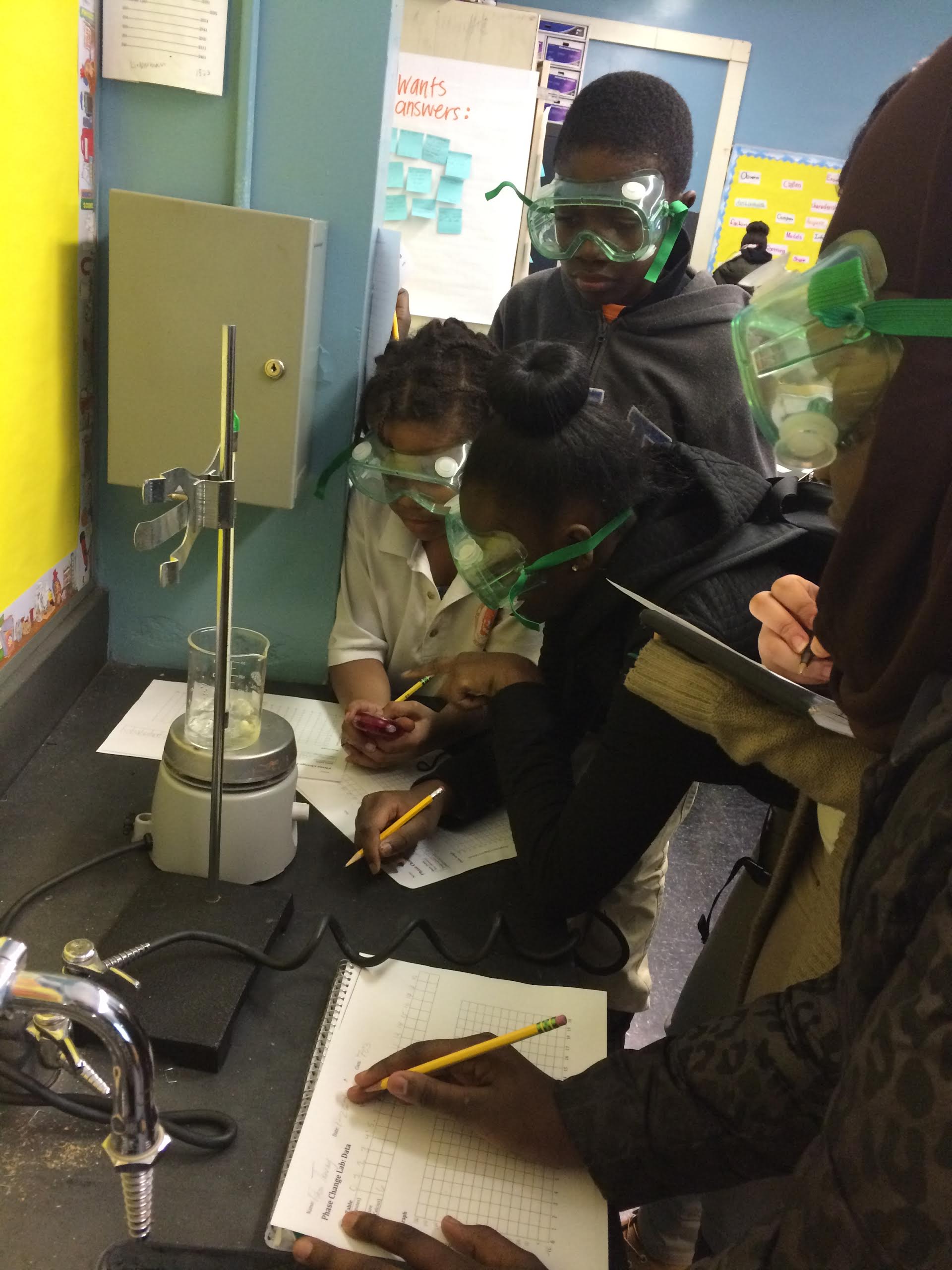
This winter, my students and I celebrated Black History Month. I teach science, so the occasion offered us a chance to talk about chemistry through the lens of environmental justice. They’re learning how, as people of color from low-income families, they are often placed at a health disadvantage because of the lack of resources available in their communities. As we’ve delved deeper, I’ve watched them make powerful connections to the disadvantages they experience more viscerally in their own daily lives – when a cashier is squinting suspiciously when they walk into a store, when more news breaks of another person who looks like them losing their lives to senseless violence, police brutality and violence on the streets. Like the polluted air they breathe, these injustices are affecting my kids in the South Bronx every day.

In the face of these realities, we have no time to waste. This school year marked the first in which the majority of public school students are minorities. Our generation has a responsibility to work to ensure that each and every one of these students is moving through a system that affirms their identities, shows them they’re valued, and allows them access to the opportunities they have been denied for far too long.

darylfordWhile the “whites only” signs of the ’60s have come down, the reality of separate and unequal endures. Alongside glaring gaps in educational, employment and economic opportunity, people of color in this nation face a variety of subtler, no less damaging assumptions. A successful black lawyer hears whispers of affirmative action. A young black boy on a corner is seen as “lurking,” while his white peers “hang out.” A black college student is asked to give “the black perspective” to a seminar full of white students who are never asked to speak on behalf of their race.

In my class, it didn’t take long for my kids to notice that most of the scientists and innovators they read about are primarily white and male. So as they learn to think, write, and report like scientists, they’re also asking about how to use their skills to advocate for themselves and their communities. They are eager to learn not only about chemistry, but about how they can apply what they learn in their science class to build a more equitable future.

As a teacher, nothing could thrill me more than seeing my kids so engaged and passionate about leveraging their newfound knowledge. I joined Teach For America because I love to learn and I believe that education is the key to opening doors that have been locked to families and communities for years. Now that I’m in the classroom, I am convinced more deeply than ever that teachers have the power to help their students transform their own lives.

We have a long way to go as a country before we truly achieve justice for all. To fix the systemic oppression that has created the gross inequality of the present will take the hard, dedicated work of countless leaders and change-makers – many who have experienced it firsthand, others who bear witness to it from further away. We must work toward these long-term changes as well as the immediate, urgent opportunities to change the way our students view themselves and their futures.

As teachers, we can play a central role in this. Every day, we can remind our kids that their thoughts, ideas, identities and opinions are important. We can share our own stories so that when our kids look to the front of the room, they see a little bit of themselves reflected back. We can remind them that they matter, that they always have and that they always will.

Daryl Ford is a 2013 Allegheny graduate and a Teach For America-New York City corps member. She teaches science/special education at MS 22 in the South Bronx.

Source: Academics, Publications & Research

From Junk to Funk

Logo2

Allegheny students make a fashion statement with trash

Lying on the table were a few pieces of cardboard, some wrinkled aluminum foil and about 30 never-before-played CDs. Oh, and don’t forget the large bag overflowing with old microfilm.

Some would see this and search for the nearest trashcan. But not Jared Balik, Emily Herwerden and Rose Fischer. These students look at what most consider trash and instead see treasure.

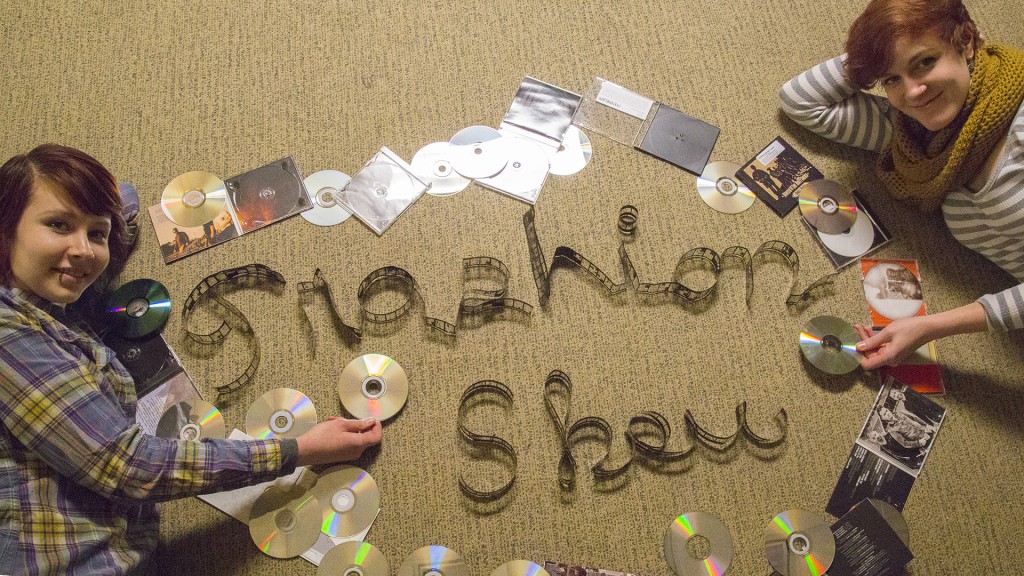
The students are using these items and more to create costumes for Allegheny’s sixth annual Trashion Show, an annual fashion-style show that encourages groups and individuals to create funky outfits using only recycled material that would otherwise go in the recycle bin or trash. The show will take place Sunday, March 29, at 4 p.m. in the Campus Center Lobby.

This year’s event, called “Junk Jungle,” is hosted by Students for Environmental Action (SEA), a group whose goal is to work for a positive change, creating a healthier environment and more sustainable planet and way of life.

2013 WinnerAccording to junior Jared Balik, SEA co-president, the idea for the Trashion Show is to promote waste awareness and recycling/reuse. Some examples of materials used for costumes in the past include egg and milk cartons, newspaper, plastic bottles, solo cups, flour bags and 35-mm film.

“We try to use the event as an educational opportunity to raise awareness about waste minimization efforts,” says Balik, who is a double major in biology and environmental science. “I think participants walk away with an enhanced appreciation for what creativity can accomplish in terms of repurposing ‘junk.’”

Each year, the show averages 10 to 12 entries. A panel of judges including administrators and students chooses winners based on categories such as “best outfit” or “most wearable outfit.” Assistant Professor of English Matthew Ferrence serves as emcee.

“The Trashion Show is a chance for students to show their creativity,” says senior Emily Herwerden, SEA treasurer who is a double major in environmental studies and German. “This is my first time creating an outfit for the show. I’m really excited to be involved this year.”

Herwerden says she plans to use CDs that were donated from the College’s radio station, WARC 90.3, to make a dress for the show. “I plan to flip the CDs silver-side out and use them on the skirt,” she says. “We also received the donation of old microfilm from the library, so I plan to use that as the bodice.”

2014 groupPlanning for the annual event doesn’t happen overnight. Balik says it requires a “daunting amount of planning and a bunch of student-led committees,” with the group setting up the Campus Center lobby and stages, coordinating lights and sound, advertising and promoting the event, designing decorations and recruiting individuals to create outfits.

Freshman Rose Fischer, who plans to major in environmental science, serves as an SEA member and is on the decoration committee for this year’s Trashion Show. She says the group already has brainstormed ideas to make sure the stage fits in with this year’s “Junk Jungle” theme.

“We’re planning to use potato chip bags to make a sun and cardboard to make animals like monkeys, jaguars and toucans,” she says. “We also hope to make bugs out of bottle caps and packing peanuts, and we’re planning to spray-paint the microfilm green to make vines.

“I’m excited to see everyone’s creativity,” she adds. “We tend to think of trash as waste, but you can really repurpose it in a lot of amazing ways. Making fashion out of it is one way to do that.”

“The planning for the event can be stressful, but seeing it all happen is so satisfying, and everyone has such a great time,” Balik adds. “And if someone learns something, that’s even better. Somehow it always comes together, and it’s beautiful.

“I think the Trashion Show is unique in that it brings a kind of creativity to campus that I’ve never seen elsewhere,” he adds. “It brings people together, and it gets people pumped about environmentalism.”

Source: Academics, Publications & Research

Environmentalscience.org Ranks Allegheny College’s Environmental Science/Studies Department No. 2 in the Nation

top-environmental-science-schools-badge-300x225

Allegheny College’s Environmental Science/Studies Department ranks No. 2 in the country, according to EnvironmentalScience.org, a website dedicated to environmental science education and careers.

Allegheny’s program “teaches students to analyze the relationships between humans and the environment that we live with and use,” the site says.

Factors considered in the ranking were location, environmental practices, faculty, study abroad opportunities, teaching methods, program breadth, degree levels offered and renowned research.

“Allegheny’s environmental science department has long been dedicated to teaching students to solve real-world environmental problems,” says Professor Eric Pallant, department chair. “More than a dozen Allegheny faculty with exceptional breadth and depth in environmental problem-solving work shoulder-to-shoulder with students to make the world more sustainable. Our students and alumni have achieved extraordinary success in promoting environmental sustainability. It is a wonderful achievement to be recognized by the nation’s most reliable and expansive advocate for environmental science education and careers.”

Students enrolled at Allegheny can major in environmental science, which focuses on scientific understanding of the changing world, or environmental studies, which has a broader interdisciplinary scope and focuses on such fields as economics and policy, art, literature and philosophy.

The EnvironmentalScience.org rankings are based on published surveys, student data, and other school and career data collected through several sources, including the Integrated Postsecondary Education Data System (IPEDS) and the National Center for Education Statistics (NCES). For more information, visit environmentalscience.org/top-schools.

Visit sites.allegheny.edu/envsci to learn more about environmental science/studies at Allegheny.

Source: Academics, Publications & Research

Just Learning in the Sand

AR 4

Allegheny College’s newest piece of technology offers students a chance to roll up their sleeves and act like a kid again — a combination of sands and smarts. This augmented reality sandbox, located in the basement of Alden Hall, arrived in late January and creates three-dimensional topographical maps based on the way students physically shape the sand.

Read more.

Tyler Pecyna is the fact-checker for Pittsburgh Magazine. This article appeared in Pittsburgh Magazine’s Great Minds newsletter.

Source: Academics, Publications & Research

Bowden’s Research on Soil Science Featured in Several Publications

Professor of Environmental Science Richard Bowden co-authored a paper, “Twenty Years of Litter and Root Manipulations in a Temperate Deciduous Forest: Insights into Soil Organic Matter Dynamics and Stability,” in a special edition of the Soil Science Society of America Journal. The work, conducted at the Harvard Forest Long-Term Experimental Research Site, found that these soils increase soil C very slowly, and thus intact forests cannot be manipulated easily to increase the ability of soil to help reduce global warming pollution. The work was also featured in the article “Insights into Soil Organic Matter Dynamics and Stability in a Temperate Deciduous Forest” published in CSA News, the official magazine for members of the American Society of Agronomy, Crop Science Society of America, and Soil Science Society of America. Bowden also co-authored “Detritus Inputs & Forest Soil Organic Matter Formation: Is There a Linear Relationship Between Detrital Input Rates and Soil Carbon Accumulation?” which was delivered at the 2014 meeting of the Annual Meeting of the Soil Science Society of America. The presentation, which described results of field experiments conducted for 10-50 years in Massachusetts, Oregon, Wisconsin, Michigan, Hungary, and Allegheny’s Bousson forest, shows that soils are slow to store atmospheric carbon pollution but are vulnerable to disturbances that can release stored carbon into the atmosphere.

Source: Academics, Publications & Research

Eatmon Gives Presentation on Grassroots Environmental Enterprises

Assistant Professor of Environmental Science TJ Eatmon gave an invited research presentation at SUNY Oneonta. The presentation, “Entrepreneurship as a Vehicle for Citizen-Driven Environmental Action,” highlighted grassroots environmental enterprises that have placed pressure on existing structures to accommodate new ways of doing things, creating spaces in the process that bring together citizens and local policymakers.

Source: Academics, Publications & Research